So in the last day or so this video has been circulating around my newsfeed on Facebook, and I got the chance to actually watch it just now:
At school, I was taught that everyone is born equal. That everyone is entitled to their own opinions, lifestyles and choices, and that prejudice or discrimination in any form is wrong. I'm pretty sure most people are taught these same things, be it through school, religion, or otherwise. And yet it doesn't stop hideous acts of discrimination occurring every day.
We live in a world where norms play a huge role in what we deem to be right and correct. Anything different from these norms, and we don't trust it, and we attempt to protect ourselves from it. The problem is, that we don't see through our own cloud of uneasiness that what we view as "unnormal", is someone else's "normal". And it is often the case that the majority wins. It is always the minority that makes up the outsiders, because they're easier to annexe and easier to exclude.
I am incredibly lucky to have been brought up in a largely liberal community where explicit and visible acts of discrimination aren't regular occurrences. This doesn't mean, however, that the thought of it doesn't scare the living daylights out of me. I see the glances I get when I walk down the street holding hands with my girlfriend. I note the uses of the word "gay" as a derogatory term. I hear how people use the words "queer", "poof", "dyke", and more besides. There are people who believe that I am going to hell because of my life choices. I would like to refer these people to the above video, and the man named Donovan. In the state of Texas, you would think that an ardent Christian would be one of the first to turn a blind eye to the waitress's behaviour. But no. He tells her not to judge people. He gets so angry that he storms from the restaurant and writes a letter of solidarity. Because the the bible teaches tolerance: it teaches tolerance, love and charity. I do not call myself a Christian, but to me that is what religion is supposed to be about: loving your neighbour, standing up for the underdog, and being the best possible person you can be.
When I have children (and I say when, not if), they will be brought up learning that it doesn't matter if you have a mum and a dad, or just one parent, or two dads, or two mums. What matters is that whoever your parents are, that they love you like they love no one else, regardless. What matters is that a child is brought up in a safe, loving environment, knowing each day that they have people who care for them. My children will grow up learning that it is unacceptable to judge people just because we may see them as "different", and that discrimination is never the answer. I like to think that one day, there will be a world where everybody, regardless of race, religion, or sexuality, can live happily in one place. I'm not naive; I know that it may just be a pipe dream. But I also know that life is too short to worry about protecting ourselves from what is different. What makes this world amazing is the diversity and variety within it; if we embrace it, we'd all be a lot happier.
Friday, 27 May 2011

Monday, 23 May 2011
Review: Spring Awakening (UK Tour. 21st May 2011, Exeter Northcott)
Rarely have I ever seen a show where each and every single member of the cast makes as much of an impression individually as well as part of the company as I did yesterday whilst watching the Spring Awakening UK Tour's last night in Exeter.
The young cast gave a near-faultless performance of the show described as "suitable for anyone who is or ever was a teenager", and achieved a heart-wrenching rawness that I haven't seen in a show for a long time. Director Pete Gallagher, producers Phillip Rowntree and David Hutchinson, and casting director Scott Weston of award-winning theatre company Sell A Door have chosen a youthful and relatively (by industry standards) inexperienced cast: many of the stars are almost fresh out of training and without the huge lists of credits you grow to expect on musical playbills. Not that you would guess from watching, of course. The level of talent on that stage was, quite frankly, remarkable, and the youthful cast was a breath of fresh air.
The young cast gave a near-faultless performance of the show described as "suitable for anyone who is or ever was a teenager", and achieved a heart-wrenching rawness that I haven't seen in a show for a long time. Director Pete Gallagher, producers Phillip Rowntree and David Hutchinson, and casting director Scott Weston of award-winning theatre company Sell A Door have chosen a youthful and relatively (by industry standards) inexperienced cast: many of the stars are almost fresh out of training and without the huge lists of credits you grow to expect on musical playbills. Not that you would guess from watching, of course. The level of talent on that stage was, quite frankly, remarkable, and the youthful cast was a breath of fresh air.
Victoria Serra's debut portrayal of Wendla combines confidence and incredible vocal talent with a subtlety not often found in your typical stage-school graduate to provide the perfect portrayal of curiosity and innocence, giving way to knowledge and experience. Jonathan Eiø, one of the most experienced of the cast, provided a perfect partner for Serra in his role as the worldly-wise Melchior Gabor, his fine vocal performance and versatility making him a perfect choice for the charismatic Melchior. Billy Cullum's Moritz Stiefel was fantastically desperate and gritty (for want of a better word), and had the whole audience in tears. Also of note are Jane Stanton and Robert Eyles, playing all the adult characters in the show with great aptitude and versatility. A huge mention should also go to the Musical Director, Michael Bradley, and the rest of the band, managing Sheik's edgy showtune-come-rock-music with flair and style, building the plot and keeping everything moving.
A fantastic production gripping the audience from the first note, with an extremely promising and talented cast. Learn more about the production here, and follow the progress of the tour on Twitter: @spring_uk
A fantastic production gripping the audience from the first note, with an extremely promising and talented cast. Learn more about the production here, and follow the progress of the tour on Twitter: @spring_uk
Thursday, 19 May 2011
Some words from Auden
"[O]ur great error was not a false admiration for Russia
but a snobbish feeling
that nothing which happened in a semi-barbarous country
which had experienced neither the Renaissance nor the Enlightenment
could be of any importance:
had any of the countries we knew personally,
like France, Germany or Italy, the language of which we could speak
and where we had personal friends,
been one to have a successful communist revolution
with the same phenomena of terror, purges, censorship etc,
we would have
SCREAMED OUR HEADS OFF"
The Anonymous Crowd: The value of the City in Conrad's 'The Secret Agent'
In my previous post I talked about Eliot's bleak representation of the city in 'The Waste Land', where he portrays a particularly degrading view of the faceless crowds of commuters using the city each day. This anonymity is one of the aspects of city life that is addressed in Joseph Conrad's novel The Secret Agent. Georg Simmel wrote that "the metropolis exacts from man as a discriminating creature a different amount of consciousness than does rural life". In a rural village or community, it is hard to go unnoticed. Rural life relies upon the existence of community ties, which don't exist to the same extent in a city. "The rapid crowding of changing images" (Simmel) in a city means that almost complete anonymity can be achieved. In a crowd, one becomes part of the scenery, and can more easily blend into the background.
The character in The Secret Agent that exploits this potential for anonymity particularly well is that of The Professor. "The perfect anarchist". He uses crowds to blend into the city and travel through life with little chance of being found. As Ossipon realises, when he "looked hurriedly both ways before stepping out into the cross-currents, but the professor was already out of sight". And out of sight he remains for much of the novel, appearing only occasionally to help spread fear.
The crowded city is not only exploited by the anarchists, however. Inspector Heat attempts to use the crowds and their contrast with the Professor's isolation to gain power over the Anarchist. He tries to exploit the fact that there exists "the unattackable stolidity of a great multitude [which] was the haunting fear of his [the Professor's] loneliness". Part of the Professor's threat relies on the fear of individual attack and individual death. When faced by a crowd, his philosophy becomes inherently flawed.
However, does this "unattackable stolidity" really exist? Whilst the Inspector may wish to believe that the existence of the crowds of people in the city causes a sort of immunity against anarchists like the Professor, Christina Britzolakis notes that the city actually "appears intensely vulnerable to actual and symbolic destabilization". In an environment where no one is known, where strangers come and go every day, the safety of a crowd is cancelled out by the danger of a lack of community. The safety of a community gives way to anonymity, and allows for a less personal, harsher, more numbing attack. The anarchists know that "[t]he whole civilized world has heard of Greenwich". Not only that, but hundreds of people pass through it every day. An anarchist's goal? To create chaos. And chaos can only be caused where there are lots of people. In The Secret Agent the city is used to portray how the safety and anonymity of a crowd can instantly give way to danger caused by the same thing; it is simultaneously the safest and most dangerous place in the world.
The Unreal City: Eliot's 'The Waste Land'
Eliot's epic poem The Waste Land was published in 1922, and portrays a particularly bleak (even for Eliot) view of the city, and the crowds of commuters travelling to and from it every day. The city appears lifeless, and desert-like: there is no sign of the cosmopolitan, hustling-and-bustling image of the city we have today. The protagonist of the poem, Tiresias, can be seen as a characterisation of Eliot himself, who once was a bank clerk in London. Robert A. Day, in his essay 'The "City Man" in The Waste Land: The Geography of Reminiscence' (click here for link to article) says that "Tiresias is many things and many men [...] but among them is the Eliot of 1921, or rather his persona - the 'city man'." The poem takes us through a day in the life of one of these commuters, one of these "city men". Day continues to say that "[w]e find that London references occur in the proper order to provide a cinematic representation of a tiny nightmare Odyssey", providing a harshly bleak view of post-WWI London.
The poem's first section, 'The Burial of the Dead', begins this bleakness, stating that "A crowd flowed over London Bridge, so many,/I had not thought death had undone so many". The crowds of faceless, identical commuters make their daily journey over the bridge, heading for their "death". Their existences are lifeless; they are like the walking dead. Day describes this by writing that "[t]he density of such crowds is typical of the urban rush hour; "death" is their fate, a living death in the Hell of the City". A bit depressing, isn't it? But it really does portray the bleakness and, some would say, resentment of the city in the post-war years. Like the character of Frank Wheeler in Richard Yates' Revolutionary Road (1961), Eliot shows resentment and disparagement towards the life of a commuter.
In the third section, 'The Fire Sermon', the description of the Thames reveals that the river contains no pollution or rubbish. But this is far from positive in this case. The lack of "empty bottles", "cigarette ends", "sandwich papers" and other rubbish portrays no sign of summer. There is no "testimony to summer nights" in the river; all joy has left the place, leaving only the bleak, Styx-like river in its place. There is no life around this Thames. The description is framed by the depressing statement that "the nymphs are departed". For those of you who may not know, nymphs are traditionally represented as creatures of nature, usually beautiful young maidens who love to sing and dance. But there is no singing or dancing at the Thames portrayed in The Waste Land.
In the fourth section of the poem, 'Death by Water', the character of Phlebus is "purified of the city's profit and loss" (Day), but only achieves this purification through a) death, and b) water, contrasting dramatically with the dryness of the city, which we see particularly in the last section of the poem, 'What the Thunder said'. There is "no water but only rock" in this city, and even then we are told that actually there is "no rock". Dry, desolate, and lacking all the ideas of a city we have today, London is once again said to be "Unreal", along with the ancient and once incredibly powerful and plentiful cities of Jerusalem, Athens and Alexandria, and the romantic European city of Vienna. All unreal, all overtaken by capitalism, where money controls everything, and there is no joy left.
Perhaps not the happiest thing for a Thursday morning, eh? :-P
Wednesday, 18 May 2011
War in the 20th Century: Thomas Hardy and Virginia Woolf
1900-1953. The period of time covered by the second of my two 2nd-year English modules, entitled "Shock of the New". A time covering just over half of the 20th Century, incorporating some of the world's most important developments. Aircraft, cars, music, modern art, you name it. It's also a period incorporating some of the most important and most destructive wars the world has known. So it's no surprise that war is one of the main themes in much of the literature of the time. The early twentieth-century saw the rise of the war poet, with people desperate to learn what it was actually like in the battle-fields. Two of the most interesting writers of this period, in my opinion, with regards to war, are Thomas Hardy and Virginia Woolf.
Thomas Hardy's poetry is littered with references to the wars he saw in his lifetime. Namely, the Boer War and, of course, World War I. However, as Samuel Hynes notes, "when critics write about modern war poetry, they rarely mention Thomas Hardy" ('Hardy and the Battle God', in Thomas Hardy Reappraised: Essays in honour of Michael Millgate. ed. K. Wilson. Toronto: UTP. 2006. pp.245-261). But why is this? Why, when Hardy lived through two of the most important wars (for Britain) in the 20th Century and wrote many poems about them, is he not regarded among critics as a war poet? Samuel Hynes goes on to clarify: "In our time [...] we take 'war poet' to mean a poet who was a soldier first, who learned about war by fighting before he wrote about it." You know the types, Rupert Brooke, Siegfried Sassoon, Wilfred Owen. The guys who really experienced war as it happened. Hardy never saw a war, only heard reports of them. But why should that mean that his poems carry any less weighting? For me personally, when I hear "war poem", one of the first poems that springs to mind is Hardy's 'Drummer Hodge', not least for its poignancy and relevance to not just the Boer War, but all wars. Hodge, one of the youngest soldiers in the war, as a drummer, is carelessly "thrown" into his war grave "just as found", not given a dignified funeral, but simply a part of the process of war. He is now destined to remain forever on foreign soil, away from home, underneath "foreign constellations". I first came across this poem as a schoolchild, and it has honestly stayed with me ever since. And Hardy's other war poetry is no less poignant. Hardy was harshly critical of modern war: how war had evolved from the romantic tales of his youth. He said himself in a letter that "I constantly deplore the fact that 'civilized' nations have not learnt some more excellet and apostolic way of settling disputes than the old and barbarous one...". In his poem 'The Sick Battle-God', Hardy begins with remembering the romantic times wen "men found joy in war", a time when war involved majestic kings and "storied hero[es]". This romantic ideal is broken with the "modern meditation" that "broke/His [the god's] spell". The tone of the poem changes from romantic and idealistic to harsh and despondent, the final stanze portraying the melancholy truth of modern warfare:
Similarly, Virginia Woolf's Mrs Dalloway does not explicitly portray war. The impact of war, and notably the First World War, stretched far beyond its end date in 1918. Soldiers came back traumatised, with severe mental health problems that would not be fully understood by psychotherapists for getting on for half a century. Mrs Dalloway is one of the texts that really makes it possible, in my opinion, to understand, even just a little bit, the pain that returning home from the war could cause. Karen DeMeester, is seems, holds a similar view (here for link to article): "[Woolf's] modernist narrative form brilliantly mirrors the mind of a trauma survivor like Septimus". She goes on to explain a little about the effects of post-war trauma:
Virgina Woolf does not explicitly deal with the theme of war in her novel. She does not, except on a few occasions, mention the fighting, the impact on the world at home, how terrible it had all been. But in including Septimus in her "stream-of-consciousness" novel, she gives light to a whole new side to the tragedy of war. Like Hardy, who could not talk about war from personal fighting experience, "the customary trappings of war are all missing" (Hynes) from Woolf's novel, too. But this, if anything, provides a more poignant and more relatable experience of one of the most horrific events of the 20th Century.
Thomas Hardy's poetry is littered with references to the wars he saw in his lifetime. Namely, the Boer War and, of course, World War I. However, as Samuel Hynes notes, "when critics write about modern war poetry, they rarely mention Thomas Hardy" ('Hardy and the Battle God', in Thomas Hardy Reappraised: Essays in honour of Michael Millgate. ed. K. Wilson. Toronto: UTP. 2006. pp.245-261). But why is this? Why, when Hardy lived through two of the most important wars (for Britain) in the 20th Century and wrote many poems about them, is he not regarded among critics as a war poet? Samuel Hynes goes on to clarify: "In our time [...] we take 'war poet' to mean a poet who was a soldier first, who learned about war by fighting before he wrote about it." You know the types, Rupert Brooke, Siegfried Sassoon, Wilfred Owen. The guys who really experienced war as it happened. Hardy never saw a war, only heard reports of them. But why should that mean that his poems carry any less weighting? For me personally, when I hear "war poem", one of the first poems that springs to mind is Hardy's 'Drummer Hodge', not least for its poignancy and relevance to not just the Boer War, but all wars. Hodge, one of the youngest soldiers in the war, as a drummer, is carelessly "thrown" into his war grave "just as found", not given a dignified funeral, but simply a part of the process of war. He is now destined to remain forever on foreign soil, away from home, underneath "foreign constellations". I first came across this poem as a schoolchild, and it has honestly stayed with me ever since. And Hardy's other war poetry is no less poignant. Hardy was harshly critical of modern war: how war had evolved from the romantic tales of his youth. He said himself in a letter that "I constantly deplore the fact that 'civilized' nations have not learnt some more excellet and apostolic way of settling disputes than the old and barbarous one...". In his poem 'The Sick Battle-God', Hardy begins with remembering the romantic times wen "men found joy in war", a time when war involved majestic kings and "storied hero[es]". This romantic ideal is broken with the "modern meditation" that "broke/His [the god's] spell". The tone of the poem changes from romantic and idealistic to harsh and despondent, the final stanze portraying the melancholy truth of modern warfare:
Let men rejoice, let men deplore,Hardy may not have seen war first-hand, he may not have experienced the horror of the trenches or heard the deafening gunfire from 100 yards away, but this does not mean that his war poetry is any less significant for understanding the trauma of war.
The lurid Deity of heretofore
Succumbs to one of saner nod;
The Battle-god is god no more.
Similarly, Virginia Woolf's Mrs Dalloway does not explicitly portray war. The impact of war, and notably the First World War, stretched far beyond its end date in 1918. Soldiers came back traumatised, with severe mental health problems that would not be fully understood by psychotherapists for getting on for half a century. Mrs Dalloway is one of the texts that really makes it possible, in my opinion, to understand, even just a little bit, the pain that returning home from the war could cause. Karen DeMeester, is seems, holds a similar view (here for link to article): "[Woolf's] modernist narrative form brilliantly mirrors the mind of a trauma survivor like Septimus". She goes on to explain a little about the effects of post-war trauma:
"The survivor's traumatised mind apprehends the traumatic event as ever-present, and his memories of the event often exist in the present consciousness"This is certainly evident in Septimus. At the time of the one, haunting trauma that befell him, when his friend Evans was killed, Septimus "congratulated himself upon feeling very little" (p.73). But it is this lack of feeling that continues to haunt him after the war is over. Just a page later it is stated that "he could not feel", and he admits himself that when "his wife was crying [...] he felt nothing" (p.77). Septimus brings back with him not just horrific flashbacks and hallucinations regarding his past ("he saw things, too - he had seen an old woman's head in the middle of a fern"), but a terrifying numbness that neither he, nor anybody else, can explain. Mental health was not yet a recognised medical issue, insofar that doctors could not explain away such symptoms, and so being unable to give meaning to the traumatic events or the daily hauntings Septimus goes through, he eventually drives himself into the panic that leads to his tragic death.
Virgina Woolf does not explicitly deal with the theme of war in her novel. She does not, except on a few occasions, mention the fighting, the impact on the world at home, how terrible it had all been. But in including Septimus in her "stream-of-consciousness" novel, she gives light to a whole new side to the tragedy of war. Like Hardy, who could not talk about war from personal fighting experience, "the customary trappings of war are all missing" (Hynes) from Woolf's novel, too. But this, if anything, provides a more poignant and more relatable experience of one of the most horrific events of the 20th Century.
Procrasti-baking
This beautiful word was given to me by a friend of mine to describe another activity in which I partake whilst I am trying to escape revision/supposed to be doing work. Other than drinking tea, of course. The thing is, I simply adore baking, and it proves to be one of the best forms of procrastination that there is. And so the two words become one: procrasti-baking! My house has been positively buried in baked goods these last few days, as I am not the only procrasti-baker living here, but no one seems to be complaining yet :-P
Anyway, ingredients are somewhat limited in my kitchen (poor student and all that), so I am constantly trying to make more exciting recipes using not very much, and in the last two days I have discovered the most amazing ingredient for frosting. This stuff:

Anyway, ingredients are somewhat limited in my kitchen (poor student and all that), so I am constantly trying to make more exciting recipes using not very much, and in the last two days I have discovered the most amazing ingredient for frosting. This stuff:
Lotus Speculoos spread. I can't get enough of this stuff. Unfortunately, you can't buy it in the supermarkets over here, but I have a jar in my cupboard and it has truly helped keep me going through exam period. It's like any normal spread: peanut butter, chocolate spread etc, but tastes completely heavenly. It's amazing on toast, on pancakes, pretty much on anything. And I thought it would be amazing in frosting. And I was right. So I made an experimental batch of cupcakes with speculoos frosting, and they tasted amazing, so yesterday I decided on something bigger, something more elaborate. And oh my days was it worth it. So I'm going to share the recipe with you, in case you fancy giving procrasti-baking (or, indeed, just baking) a go. I didn't manage to take any pictures before it started getting eaten, but it's pretty, promise!
Chocolate Chip Sponge Cake with Speculoos Frosting
Ingredients
Chocolate Chip Sponge
200g butter, plus extra for greasing
200g caster sugar
2 large eggs
200g self-raising flour
1 tsp baking powder
200g chocolate (I used normal milk chocolate, but you can use whatever type you like)
Milk
Frosting
75g butter
150g icing sugar
3 large tsps speculoos spread
(The quantities here are very approximate - I just make butter icing to taste)
Instructions
1. Preheat the oven to 190C
2. Cream the butter and suger in a bowl until smooth
3. Beat in the eggs
4. Add the flour and baking powder and mix until just combined
5. Add a splash of milk until the mixture is smooth
6. Roughly chop about 165g of the chocolate and stir in, keeping the remaining chocolate to one side for later.
7. Pour into a baking tin (I used a 7" square sandwich tin) and bake in the oven for about 30-40 minutes (depending on your oven) until well risen, golden brown, and a skewer comes out clean after poking it.
8. Remove from the oven, leave to cool for a few minutes, then turn out onto a wire rack and leave to cool completely.
9. Mix together the butter and icing suger until creamy. Add more sugar or butter to taste until the consistency is right.
10. Stir in the speculoos.
11. Cover the cake in the frosting (be as generous as you like!)
12. Grate the remaining chocolate over the top of the cake.
13. Serve (with a cup of tea, of course!)
Happy procrasti-baking! :-)
Tuesday, 17 May 2011
Ben Jonson: a bit of a misery-guts?
A friend once told me that they preferred Shakespeare over Ben Jonson because Jonson was too miserable. When I pointed out that there isn't a lot in the world that can be described as more miserable than two teenagers killing themselves out of grief and lovesickness, or an entire royal family ending up dead because the late king's ghost outs the current king as a murderer, they said that they didn't mean in Jonson's plots, but his outlook on life.
What, I assume, they were talking about, was Jonson's constant satire and, perhaps, cynicism towards the world around him, shown particularly through the differences between Shakespearean and Jonsonian comedy. Where Shakespearian comedy was very definitely based in and around the idea of the "festive", and invariably involved romance, characters whose developments and interactions dominate the plot, and dealt with the problems of family and relationships, Jonson's plays set out to comment on the world around him. Jonson attacked the popular taste for "romantic" comedies, and focus on one central 'intrigue', with his characters being very typical, and usually having a dominant 'humour' that moves them.
But does this mean that Jonson, as Knapp puts it, "liked almost nothing that he saw" (here for link to article)? Or is he simply being realistic about the faults in the world? According to Cicero, Comedy should be "an imitation of life, a mirror of custom and an image of the truth", and Sidney maintains that it is "an imitation of the common errors of our life". In his plays, Jonson plays on this definition to comment on the social situations of the time.
Take, for example, Bartholomew Fair. Jonson seeks to portray all of the "evils of London" in one play, showing each of the Fair-goers to be just as false as those who participate in the Fair themselves. The Puritan Zeal-of-the-land Busy, Bartholomew Cokes, and Justice Adam Overdo all think that they can out-wit the temptation of the Fair and can make judgements about it and its inhabitants with no consequences, but are, in fact, the definite 'losers' of the plot, unable to adjust to and use the ever-changing, ever-moving atmosphere of the Fair for their own gain. Jonson comments on the state of London, and the faults of those in society who make blind judgements on others. Similarly, in Volpone, he uses the morally-void setting of Renaissance Venice to show the dangers of mercantile capitalism and to show that, ultimately, evil brings about its own destruction.
It seems to me that, whilst Jonsonian comedy may not include the joviality, the fool-playing for the simple sake of fool-playing, the romance, or indeed the magic of some Shakespearean Comedies, it is much more 'realistic', for want of a better word, and much more adherent to the classical 'rules' for comedy. Jonson attempts to mirror everyday life, without the idealising or romanticising that Shakespeare does so well. Not a misery-guts, but simply attempting to make moral comments on the state of Britain at the time.
Monday, 16 May 2011
Disguise in Comedy: Twelfth Night and Bartholomew Fair
"Disguise is the most common artifice, not merely of comedy, but of the Drama generally" (D.J Snider - click here for link). We're all familiar with it. The use of disguise for dramatic effect. And it is particularly common in Comedy, for various reasons. with disguise, you get confusion, mistaken identities, and with these, you get laughter. On the Elizabethan stage, playwrights frequently included disguise, or deception, in their comedies, using it as a comedic device.
One of the most obvious and memorable examples of disguise used in Early Modern Comedy is that of Twelfth Night. Viola, shipwrecked and grieving, disguises herself as Cesario, a eunuch, in order to become a servant to the Lord Orsino ("Conceal me what I am, and be my aid/For such disguise as haply shall become/The form of my intent", I.ii). This disguise leads to more confusion and more mistaken identities than any other play I have ever seen, studied, or performed. Viola is believed to be a man (Shakespearen transvestite comedy in its purest form), Olivia falls in love with Cesario believing him to be male, Sebastian is mistaken for Cesario (and therefore his sister) and ends up marrying Olivia, Viola is mistaken for Sebastian, and everyone is thoroughly confused until the end of the plot when it is revealed that Sebastian is alive and well and Cesario is actually a girl. Phew.
But this is not the only example of disguise in the play. Olivia's steward, Malvolio, dresses in crossed garters and yellow stockings in the hope of winning the fair Olivia's heart, and Feste, the clown, disguises himself as a priest, Sir Topas, in order to fool Malvolio. This itself is an interesting deception. Although it is dark, meaning that Malvolio will not be able to see him, Feste still dons the costume of a priest, portraying the importance of clothing in identity. Feste uses the costume to concrete his new "identity", playing on the idea that by putting on different clothes, you can change your personal identity. To a varied audience of all classes, this would have been laughable for everyone. The thought that by dressing in a nobleman's clothes, you can become a nobleman? The very idea! Anyway, you see what I mean.
Malvolio's change of dress is not so much a disguise, but it does represent a change of identity. Malvolio dons his new clothes in the hope of appearing as a nobleman, much like Feste dresses differently to impersonate a nobleman. Ultimately, Malvolio's attempts fail (quite drastically), and his attempts to use disguise for personal gain end in his humiliation and failure.
This use of disguise for personal gain is a theme portrayed in similar ways in Jonson's Bartholomew Fair, however disguise is used more subtly than in Twelfth Night. The Fair causes almost every character to assume a false identity, as the vulgarity and Carnivalesque nature of the Fair have bizarre effects on the Londoners. As Katharine Eisaman Maus writes, "[t]he Londoners assume they will experience the fair as tourists, from an emotional distance. But the shabby booths and dusty performance spaces have unexpectedly transformative effects on the visitors." (English Renaissance Drama: A Norton Anthology, ed. D. Bevington. New York: W.W. Norton & Company, 2002. p.961). The visitors to the fair all experience some form of identity change, using the fair itself as a disguise.
The most interesting disguise in the play is that of Justice Adam Overdo, who adopts a disguise in order to seek out wrong-doings at the fair. This, like Malvolio's disguise in Twelfth Night, ultimately fails, and the Judge gets accused of theft, put in the stocks, and publically humiliated, shown to be as false as everyone else at the Fair. Overdo's disguise begins, as with most other disguises, with the costume ("They may have seen many a fool in the habit of a justice, but never till now a justice in the habit of a fool"), but, rather than this being the ultimate identity-altering factor, it is only when he is treated as a fool that he truly becomes one (what's here? A stoic in the stocks? The fool is turned philosopher"). Here Overdo's disguise is transformed from deceptive disguise to true identity, almost like his first identity as a Judge has diasppeared.
Disguise is used to hilarious effect in both these plays, in slightly different ways. But in both to portray the transient nature of identity: it is possible to transform oneself almost completely by assuming the costume and role of another person. Just, incidentally, as the actors themselves do on the stage.
Sunday, 15 May 2011
Some thoughts about a thing
I haven't posted much for a few days - the actual start of my exams have meant that I have entered a half-productive, half-panicking state that leaves me enough time to just exist if I'm not revising. Or something like that.
Anyway, I came across this video via Skulls and Butterflies this morning and, along with the encouragement from the comment of loveliness from Lady Wordsmith on my previous post, I decided it was time for some ponderings.
Firstly, I want to talk about the sheer power of spoken-word poetry. It's not really a thing you hear much about over here in the UK. But in the US, Spoken Word is massive. Just YouTube 'spoken word' or 'bowery poetry club' or 'poetry slam' and you gets hundreds of people sharing bits of their life through poetry. I don't know about anyone else, but I think of poetry as one of the most intimate forms of writing. You can get a whole lot of, well, anything, in a poem. Poetry has, for centuries, been used as a form of self-expression. And Spoken Word takes that concept, that idea of opening up a little piece of your soul, and puts it into a performance. These people are incredible. To be able to stand up, to talk about the issues they do, freely, without judgement, and open a little bit of their hearts and minds to an audience is just incredible. Heck, I wish it'd catch on over here (Exeter University Spoken Word Society, anyone?). But anyway, back to the video.
Pretty. It's what all girls want, really, isn't it? I know that when I was a little girl, I would have given an arm to look like any one of these:

Obviously now I understand the impossibility of that dream. But at the time? I saw perfect hair, big doe eyes, little nose, straight teeth, tiny frame, long flowing dress. The closest I ever got was when I was about seven, and I had hair down to my waist and still hadn't really grown into my eyes. And I admit, it still wasn't very close.
Like most teenagers, I went through the irritation that is braces. As it turned out, the orthodontist took us for a bit of a ride and took them off too early, so I still don't have the perfectly straight teeth everyone thought I would end up with. But that hasn't held me back too much. But some women go to so much more effort to look how they think they should. Botox. Liposuction. Facelift. Implants. All manner of appearance-changing procedures designed to make women feel better about themselves. And sometimes, it does. Sometimes, surgery is that confidence-boosting step that a woman needs in her life. Sometimes, it's not. The thing is, no one can ever be completely satisfied with how they look. I defy anyone on this world, with or without surgery, to say that they would not change one thing about themselves if they were given the chance. Everyone has things they don't like. And the mediatisation of "correctional" surgery means that people feel like they should change.
The thing is, our individual "imperfections" are what make us unique. They're what make us real. Personally, I don't ever want perfect, because that means that I'd have to spend the rest of my life trying to live up to it. I'd much rather have real. Because I think real is more than pretty.
People do crazy things to feel better about themselves every day. And Cosmetic Surgery is a much nicer phrase than Self Mutilation.
Anyway, I came across this video via Skulls and Butterflies this morning and, along with the encouragement from the comment of loveliness from Lady Wordsmith on my previous post, I decided it was time for some ponderings.
Firstly, I want to talk about the sheer power of spoken-word poetry. It's not really a thing you hear much about over here in the UK. But in the US, Spoken Word is massive. Just YouTube 'spoken word' or 'bowery poetry club' or 'poetry slam' and you gets hundreds of people sharing bits of their life through poetry. I don't know about anyone else, but I think of poetry as one of the most intimate forms of writing. You can get a whole lot of, well, anything, in a poem. Poetry has, for centuries, been used as a form of self-expression. And Spoken Word takes that concept, that idea of opening up a little piece of your soul, and puts it into a performance. These people are incredible. To be able to stand up, to talk about the issues they do, freely, without judgement, and open a little bit of their hearts and minds to an audience is just incredible. Heck, I wish it'd catch on over here (Exeter University Spoken Word Society, anyone?). But anyway, back to the video.
Pretty. It's what all girls want, really, isn't it? I know that when I was a little girl, I would have given an arm to look like any one of these:
Obviously now I understand the impossibility of that dream. But at the time? I saw perfect hair, big doe eyes, little nose, straight teeth, tiny frame, long flowing dress. The closest I ever got was when I was about seven, and I had hair down to my waist and still hadn't really grown into my eyes. And I admit, it still wasn't very close.
Like most teenagers, I went through the irritation that is braces. As it turned out, the orthodontist took us for a bit of a ride and took them off too early, so I still don't have the perfectly straight teeth everyone thought I would end up with. But that hasn't held me back too much. But some women go to so much more effort to look how they think they should. Botox. Liposuction. Facelift. Implants. All manner of appearance-changing procedures designed to make women feel better about themselves. And sometimes, it does. Sometimes, surgery is that confidence-boosting step that a woman needs in her life. Sometimes, it's not. The thing is, no one can ever be completely satisfied with how they look. I defy anyone on this world, with or without surgery, to say that they would not change one thing about themselves if they were given the chance. Everyone has things they don't like. And the mediatisation of "correctional" surgery means that people feel like they should change.
The thing is, our individual "imperfections" are what make us unique. They're what make us real. Personally, I don't ever want perfect, because that means that I'd have to spend the rest of my life trying to live up to it. I'd much rather have real. Because I think real is more than pretty.
People do crazy things to feel better about themselves every day. And Cosmetic Surgery is a much nicer phrase than Self Mutilation.
Wednesday, 11 May 2011
Reasons to love Summer 1: Music
I always think it's a shame that they choose to put exams at the beginning of summer, because it really does put a downer on what is, in my opinion, the loveliest season. Especially in Exeter. For anyone who has not yet experienced Exeter in the summertime: firstly, shame on you, and secondly, do it. Because there are few places lovelier than the South-West in the summer months. There are many reasons why I love summer, which I do plan to share with you. My first, and probably most unsurprising, for those of you that know me, is music.
 Music in the summer is always the best kind, don't you think? Hundreds of people make playlists specifically for summer, but you don't see many people making playlists for any of the other seasons very often, do you? Music brought out in the summer always has the aim to relax, to take advantage of that lazy, celebratory summer feeling. Summer is the time I find myself pulling out my oldest (OK, so maybe not oldest) music collections, and listening to things like this:
You gotta love a bit of Hanson :-P. That song, along with The Beach Boys, The Doors, Jack Johnson, Frank Sinatra, The Drifters, Colbie Caillat, and Mungo Jerry, forms a large part of my summer music choices.
Of course, summer also means BBC Proms season, aka the season where I get increasingly antisocial as I lock myself away listening to the world's musicians. And this season looks set to be completely fantastic (as always). Highlights this year for me will be, without a doubt, Proms 6, 14, 39, 42, 44, 53, 68, and 72, amongst others (guess who the Russian Romantic fan is...).
For me, though, music in the summer doesn't just mean listening to it, but performing it, as well. Which is why the prospect of this summer is even more exciting :-) EUSO (no longer my baby, but still a massive part of my life) are performing our annual Proms-style concert, complete with Weber, Mozart, Beethoven, and the traditional Proms favourites: click here for full playlist. It's going to be wonderful. And, perhaps the culmination of almost a year's work by dozens of people, EU Choral Society, along with a whole host of other musicians and an awesome troupe of dancers, are performing Carmina Burana. I can hardly contain myself for the excitement. Not only that, but as well as these, the University of Exeter Arts Week 2011 is happening. Amazing.
So here is where I apologise in advance for any shameless plugging and/or rambling on about how amazing it's all going to be (except I already did that). And here is where I'm sure you'll agree that it's shaping up to be a pretty awesome summer :-)
Monday, 9 May 2011
The Grotesque Body: Falstaff and Ursula
One of the themes that my seminar tutor for my first 2nd-year undergraduate English module, Shakespeare and Renaissance Comedy, was very concerned with was that of The Grotesque Body, a concept first put forward by Mikhail Bakhtin. The concept of the Grotesque Body is closely related to Carnival, and the world of excess associated with it. Bakhtin wrote that:
Sir John Falstaff of Merry Wives is the very same Falstaff as appeared in Henry IV, after Queen Elizabeth I herself allegedly saw the history play and asked for a play about "the fat knight", as he was known. There are various pictures and paintings of Falstaff around, but I think that this one, by Eduard von Grutzner, portrays the character at his most "grotesque":
You see here an example of the kind of thing Bakhtin was talking about. Excessive, seemingly continuous, fat, and generally disgusting, yet still also sexually available and fertile. Think lecherous old man down the local pub who's had a bit too much to drink, and you've pretty much got Falstaff, except not quite as bad.
The name 'Falstaff' could be a 'punny' (forgive me) reference to the character's fertility and supposed sexual prowess, indeed, he frequently makes claims about his 'full staff', claiming that the Mistress Page "examined [his] parts with most judicious oeillades..." (1.3), and talking about "the attraction of [his] good parts" (2.2). Indeed it seems like our dear Mr Falstaff is little obsessed with just how "good" his "parts" are (oo-er). Frequently in the text as well do we see reference to the fat knight's size. Not only did Mistress Page examine his parts, but also his "portly belly", he says of himself that "I am in the waist two yards about" (1.3), and after his rather embarrassing dip in the river he says that "water swells a man, and what a thing should I have been when I had been swelled?" (3.5).
So it is clear that dear old Sir John Falstaff is an example of the physical traits of the grotesque body, but it is also much more than the simple physical descriptions. His predatory sexual nature adds to the grossness of it all, as does his purpose as a 'laughing stock' in the play. In Merry Wives we do not so much laugh with Falstaff, i.e. he does not play the role of a clown or a fool, such as Feste in Twelfth Night, but, rather, we laugh at him. This concept in itself is very much linked to the world of the Carnival and the grotesque. When Falstaff is humiliated, it is not amusing in the traditional sense of comedy, but in the more carnivalesque sense. Take for example this scene from The Hunchback of Notre Dame:
Now, I know that I'm studying a literature degree and all, and that this is from a Disney movie, but this is a perfect representation of the type of humour we see with the grotesque. Slightly different, evidently, in the fact that we feel sympathy for Quasimodo (due to the Disney nature of the film), whereas Falstaff doesn't have the redeeming quality of being loveable and wonderfully nice. But at the end of the play, I think it is fairly easy to feel some sort of compassion for Falstaff, and this is evident in the other characters welcoming him back into the community, and not just casting him away. This is where the comedy changes. We are no longer laughing at Falstaff, and so his grotesque qualities actually start to diminish. But that's another story.
The other most grotesque character I studied on this module has to be the character of Ursula from Bartholomew Fair. Different from Falstaff, in the evident fact that she is a woman. However, it has been suggested that Jonson took his initial inspiration for the character from a description of Falstaff in Henry IV, where he is referred to as a "roasted Manningtree Ox with the pudding in his belly" and a "Bartholomew boar-pig". Now, if there is any character to encapsulate these two descriptions better than the "fatness of the fair" herself, I don't know how they would do it. She is, for me, the epitome of what the grotesque body represents.
Neil Rhodes, in his essay 'The Fatness of the Fair', writes that "Bartholomew Fair is the apotheosis of Elizabethan Grotesque", and also goes on to compare her with, who would have guessed it, Falstaff himself: "[Ursula's] body, like Falstaff's, is composed of volatile organic matter...[and] has fertile properties". I know, sounds like a delightful character, no? Just wait until you see the descriptions given of her in the play itself. In the first act she is described by Busy as "a great face, a foul face...it may be eaten, and in the fair, I take it, in a booth, the tents of the wicked" (1.6). She describes herself as "all fire and fat" (2.2) and as a "plain plump wench...juicy and wholesome" (2.5).
Katharine Eisaman Maus, in her introduction to the play, states that "Ursula...embodies appetite", and describes her as "gargantuan, sweaty, lowborn, foulmouthed, domineering, promiscuous, and uninhibited by anything resembling principle". She is never fulfilled, and is the perfect example of the Bakhtinian 'neverending' body:
Both these characters portray the Bakhtinian grotesque body to incredible effect in their respective plays. Used for comic effect, and also to portray the excessive and temptation-filled world of Carnival, these two characters are, to be honest, disgustingly awesome. It's no wonder that the Queen herself wanted to see more of the grotesque :-P
The grotesque body is not separated from the rest of the world. It is not a closed, complete unit; it is unfinished, outgrows itself, transgresses its own limits. The stress is laid on thoe parts of the body that are open to the outside world, that is, the parts through which the world enters the body or emerges from it [...] This means that the emphasis is on the apertures or convexities [...] the open mouth, the genital organs, the breasts, the phallus, the potbelly, the nose...I know, lovely, right? Bakhtin refers to the grotesque body as "the ever unfinished, ever creating body". In short, it's pretty nasty. But there is no shortage of grotesque bodies in Renaissance drama, particularly comedies, two of the best, in my opinion, being those of Falstaff, from The Merry Wives of Windsor, and Ursula, from Jonson's Bartholomew Fair.
Sir John Falstaff of Merry Wives is the very same Falstaff as appeared in Henry IV, after Queen Elizabeth I herself allegedly saw the history play and asked for a play about "the fat knight", as he was known. There are various pictures and paintings of Falstaff around, but I think that this one, by Eduard von Grutzner, portrays the character at his most "grotesque":
 | |
| Eduard Grützner - 'Falstaff' |
The name 'Falstaff' could be a 'punny' (forgive me) reference to the character's fertility and supposed sexual prowess, indeed, he frequently makes claims about his 'full staff', claiming that the Mistress Page "examined [his] parts with most judicious oeillades..." (1.3), and talking about "the attraction of [his] good parts" (2.2). Indeed it seems like our dear Mr Falstaff is little obsessed with just how "good" his "parts" are (oo-er). Frequently in the text as well do we see reference to the fat knight's size. Not only did Mistress Page examine his parts, but also his "portly belly", he says of himself that "I am in the waist two yards about" (1.3), and after his rather embarrassing dip in the river he says that "water swells a man, and what a thing should I have been when I had been swelled?" (3.5).
So it is clear that dear old Sir John Falstaff is an example of the physical traits of the grotesque body, but it is also much more than the simple physical descriptions. His predatory sexual nature adds to the grossness of it all, as does his purpose as a 'laughing stock' in the play. In Merry Wives we do not so much laugh with Falstaff, i.e. he does not play the role of a clown or a fool, such as Feste in Twelfth Night, but, rather, we laugh at him. This concept in itself is very much linked to the world of the Carnival and the grotesque. When Falstaff is humiliated, it is not amusing in the traditional sense of comedy, but in the more carnivalesque sense. Take for example this scene from The Hunchback of Notre Dame:
Now, I know that I'm studying a literature degree and all, and that this is from a Disney movie, but this is a perfect representation of the type of humour we see with the grotesque. Slightly different, evidently, in the fact that we feel sympathy for Quasimodo (due to the Disney nature of the film), whereas Falstaff doesn't have the redeeming quality of being loveable and wonderfully nice. But at the end of the play, I think it is fairly easy to feel some sort of compassion for Falstaff, and this is evident in the other characters welcoming him back into the community, and not just casting him away. This is where the comedy changes. We are no longer laughing at Falstaff, and so his grotesque qualities actually start to diminish. But that's another story.
The other most grotesque character I studied on this module has to be the character of Ursula from Bartholomew Fair. Different from Falstaff, in the evident fact that she is a woman. However, it has been suggested that Jonson took his initial inspiration for the character from a description of Falstaff in Henry IV, where he is referred to as a "roasted Manningtree Ox with the pudding in his belly" and a "Bartholomew boar-pig". Now, if there is any character to encapsulate these two descriptions better than the "fatness of the fair" herself, I don't know how they would do it. She is, for me, the epitome of what the grotesque body represents.
Neil Rhodes, in his essay 'The Fatness of the Fair', writes that "Bartholomew Fair is the apotheosis of Elizabethan Grotesque", and also goes on to compare her with, who would have guessed it, Falstaff himself: "[Ursula's] body, like Falstaff's, is composed of volatile organic matter...[and] has fertile properties". I know, sounds like a delightful character, no? Just wait until you see the descriptions given of her in the play itself. In the first act she is described by Busy as "a great face, a foul face...it may be eaten, and in the fair, I take it, in a booth, the tents of the wicked" (1.6). She describes herself as "all fire and fat" (2.2) and as a "plain plump wench...juicy and wholesome" (2.5).
Katharine Eisaman Maus, in her introduction to the play, states that "Ursula...embodies appetite", and describes her as "gargantuan, sweaty, lowborn, foulmouthed, domineering, promiscuous, and uninhibited by anything resembling principle". She is never fulfilled, and is the perfect example of the Bakhtinian 'neverending' body:
I am afraid I do water the ground in knots, as I go, like a great garden-pot; you may follow me by the S's I make (2.2)Urinating uncontrollably as she walks along, Ursula feeds the ground, whilst taking in all the pleasures and excesses of the Fair; there is a neverending cycle associated with her body and the Fair. And yet despite all her flaws, she is still portrayed as a symbol of fertility, just like Falstaff. She is openly promiscuous, and Overdo describes her booth as "the very womb and bed of enormity, gross as herself." She is, as Maus writes "everything Early Modern Englishmen ordinarily thought they despised". "Thought" being the operative word here. Disgusting, greedy, greasy, insatiable and, let's be honest, just a bit grim, Ursula is everything perceived to be wrong about the Fair and the world of Carnival. And yet people can't get enough. Whilst grotesque, she is also compelling and desired.
Both these characters portray the Bakhtinian grotesque body to incredible effect in their respective plays. Used for comic effect, and also to portray the excessive and temptation-filled world of Carnival, these two characters are, to be honest, disgustingly awesome. It's no wonder that the Queen herself wanted to see more of the grotesque :-P
A Not-So-New Addiction
So we're very definitely in exam time now. There are people pulling all-nighters, starting to panic, and go slightly insane with exam fever. I have infinite amounts of sympathy for those who have exams today, on the first proper day of sit-down exams, here in Exeter. May all the forces of nature look kindly upon you. I am also incredibly grateful that my first exam is not until Thursday.
Meanwhile, to help get me through this hideous time of trying to re-learn (or, in some cases, just learn) everything I am supposed to know, or might need to know (damn you oh-so-subjective literature degree), I have turned to my one unavoidable vice.
Tea. During every other time of the year, I simply drink it as every normal person drinks it. Once, maybe twice - oh okay, three times - a day. But during exam time, gosh (I love the word 'gosh'). I chain-drink the stuff. Yesterday I managed to restrict myself to five cups, which actually isn't that bad. But today I've already had two and it's only 9.40am. If I could set up an IV linking me to a vat of tea, I would. And you know the best thing? I have no intention to stop. Because it is my view, that, along with pistachio nuts (the green ones), tea can cure all ills. Including the panic currently set in about iminent exams.
For those of you who may encounter me in the near future, there is a fool-proof way to calm me down if I look like I might be about to run around in a mild frenzy (I know there are a couple of you out there that will very definitely reference this sentence next time I see you. It was specifically for you :-P). A cup of tea. Any sort. But a good cup of traditional English Breakfast tea goes down a treat at any time of the day. Mmm. I'm more relaxed just thinking about it. Oh and some Beethoven wouldn't go amiss, either. Gotta love a bit of Ludwig (watch this space for some excitement about EUSO's ventures this term).
So for those with exams today, tomorrow, or indeed at any point in the near future, good luck, and good tea :-)
Meanwhile, to help get me through this hideous time of trying to re-learn (or, in some cases, just learn) everything I am supposed to know, or might need to know (damn you oh-so-subjective literature degree), I have turned to my one unavoidable vice.
 |
| Confusingly in a "Hot Chocolate" mug... |
For those of you who may encounter me in the near future, there is a fool-proof way to calm me down if I look like I might be about to run around in a mild frenzy (I know there are a couple of you out there that will very definitely reference this sentence next time I see you. It was specifically for you :-P). A cup of tea. Any sort. But a good cup of traditional English Breakfast tea goes down a treat at any time of the day. Mmm. I'm more relaxed just thinking about it. Oh and some Beethoven wouldn't go amiss, either. Gotta love a bit of Ludwig (watch this space for some excitement about EUSO's ventures this term).
So for those with exams today, tomorrow, or indeed at any point in the near future, good luck, and good tea :-)
Sunday, 8 May 2011
Voltaire's 'Candide': The old woman, and the value of action
One of the best, and most interesting characters, in my opinion, in Candide is that of the old woman. A secondary character that, at first, doesn't really seem to matter that much for the concerns of the plot. However, it seems to me that this woman is the personification of how the philosophy of Optimism (see my previous blog post here) can sometimes be beneficial. As I have said before, there is no harm in being optimistic. And this old woman, rather than try to explain away the horrors of the world, rather than, like Pangloss, suggesting that "tout est au mieux", she accepts the world for what it is. She accepts that it is full of evil and terror, but it does not stop her living. Despite the fact that she has lived a truly horrific (and, indeed, unbelievable) life, she continues to help people, and portray a worldy-wise view that is both optimistic and realistic. After recounting her tale of woe to Candide and Cunégonde, she says that
The old woman is also the character in the book to first raise the question of action vs. abstract reflection in the novel. In the last chapter of the story, she asks the following:
In this short chapter, Voltaire suggests that abstract reflection can only achieve so much in life: it is far better to have action than passivity. Honest work keeps us away from "three great evils", namely vice, or moral weakness, a trait which is clearly apparent throughout the plot in the evils that happen; want, or greed, again portrayed in numerous examples throughout; and idleness, which can lead to the two former ills. As Pangloss says, man was not born to be idle, and so therefore work is required in order to live a fulfilling life.
Voltaire's argument against abstract reflection and passivity culminates in the very last (and very famous) line of the novella. After Pangloss's lengthy monologue reflecting on all of the past events and how they support his philosophy, Candide simply turns to him and says "Cela est bien dit [...] mais il faut cultiver notre jardin", finally rejecting Pangloss and his thinking, and turning instead to a practical, and, some would say, more fulfilling, life.
"je voulus cent fois me tuer, mais j'aimais encore la vie. Cette faiblesse ridicule est peut-être un de nos penchants les plus funestes; car y a t-il rien de plus sot que de vouloir porter continuellement un fardeau qu'on peut toujours jeter par terre?"This is, without a doubt, contrary to Pangloss's view. The old woman acknowledges that the world is, at times, a horrific place. However, she also acknowledges that despite all of the hardships life has placed upon her, she still wants to live, and questions why it is that the human race continues to allow themselves to live when the very act of living causes so much pain. Now, the old woman calls this a weakness, but I see it as the innate strength of the human race. To continue living, even at the worst of times, takes more strength than to let life slip away. The old woman's realistic philosophy (although she is never called a philosopher) is further shown when she challenges Cunégonde to find one man on their ship who has not, at some point or another, cursed his own existence. Of course, had Pangloss been with them, he would have been that one man, further satirising his level of optimism.
The old woman is also the character in the book to first raise the question of action vs. abstract reflection in the novel. In the last chapter of the story, she asks the following:
'Je voudrais savoir lequel est le pire, ou d'être violée cent fois par des pirates nègres, d'avoir une fesse coupée, de passer par les baguettes chez les Bulgares, d'être fouetté et pendu dans un auto-da-fé, d'être disséqué, de ramer en galère, déprouver enfin toutes les misères par lesquelles nous avons tous passé, ou bien de rester ici à ne rien faire?'Candide's response, "c'est une grande question", is correct. It is indeed a good question. What is better, to have a life full of action and excitement, regardless of how horrific, or to simply sit back and do nothing? The characters remaining at the end of the novella go to find out the answer to this question, first visiting a derviche, who shuts the door in their faces when questioned about the meaning of life, and then visiting a Turk, who informs them that "je n'ai que vingt arpents [...] je les cultive avec mes enfants; le travail éloigne de nous trois grands maux: l'ennui, le vice, et le besoin". After contemplating these words, Candide, Pangloss, and the other characters begin to agree, Pangloss declaring that "quand l'homme fut mis dans le jardin d'Eden, il y fut mis ut operaretur eum, pou qu'il travaillât, ce qui prouve que l'homme n'est pas né pour le repos".
In this short chapter, Voltaire suggests that abstract reflection can only achieve so much in life: it is far better to have action than passivity. Honest work keeps us away from "three great evils", namely vice, or moral weakness, a trait which is clearly apparent throughout the plot in the evils that happen; want, or greed, again portrayed in numerous examples throughout; and idleness, which can lead to the two former ills. As Pangloss says, man was not born to be idle, and so therefore work is required in order to live a fulfilling life.
Voltaire's argument against abstract reflection and passivity culminates in the very last (and very famous) line of the novella. After Pangloss's lengthy monologue reflecting on all of the past events and how they support his philosophy, Candide simply turns to him and says "Cela est bien dit [...] mais il faut cultiver notre jardin", finally rejecting Pangloss and his thinking, and turning instead to a practical, and, some would say, more fulfilling, life.
Voltaire's 'Candide': Pangloss and l'Optimisme
This is the first of (probably) a couple of posts on this novel, for it would be a) incredibly boring, and b) utterly pointless to try and talk about every issue that arises from this work all in one go, so please do forgive me if you are not in the least interested in the topic.
Voltaire is, arguably, one of the most famous of all French philosophers, being one of the three philosophes of the French Enlightenment, along with Rousseau and Diderot. He published, and had reasonable success with, many works, and his novella Candide, published in 1759, was the third of four texts studied on Provoking Thoughts. The novella is, from a fictional and literary point of view, an adventure story, telling the story of its eponymous protagonist Candide, in his adventures across the globe. Of course, whilst it is a very entertaining read (I strongly recommend you give it a perusal even if you have no interest whatsoever in philosophy or Enlightenment values - a translation is available for free here on Literature.org, possibly one of my favourite sites ever), it is also a philosophical satire on a whole host of things. The principal of which, in my opinion, is the philosophy of Optimisme.
Let me first introduce you to Gottfried Leibniz:
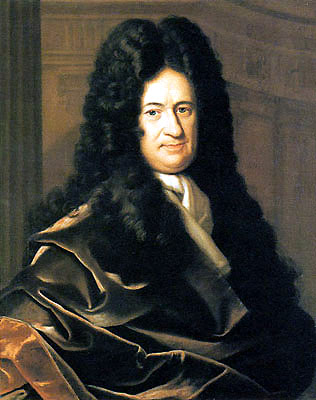 Handsome chap, no?
Anyway. This guy was a German philosopher in the 17th and early 18th Century, who raised a few principles in his life, one of which was the Principle of Sufficient Reason, which states that:
Pope (1688-1744) applies this idea in his Essay on Man:
(Sorry for the length of the post...)
Voltaire is, arguably, one of the most famous of all French philosophers, being one of the three philosophes of the French Enlightenment, along with Rousseau and Diderot. He published, and had reasonable success with, many works, and his novella Candide, published in 1759, was the third of four texts studied on Provoking Thoughts. The novella is, from a fictional and literary point of view, an adventure story, telling the story of its eponymous protagonist Candide, in his adventures across the globe. Of course, whilst it is a very entertaining read (I strongly recommend you give it a perusal even if you have no interest whatsoever in philosophy or Enlightenment values - a translation is available for free here on Literature.org, possibly one of my favourite sites ever), it is also a philosophical satire on a whole host of things. The principal of which, in my opinion, is the philosophy of Optimisme.
Let me first introduce you to Gottfried Leibniz:
Anyway. This guy was a German philosopher in the 17th and early 18th Century, who raised a few principles in his life, one of which was the Principle of Sufficient Reason, which states that:
Since there is an infinity of possible universes in God's ideas, and since only one of them can exist, there must be sufficient reason for God's choice.This principle in turn led to the idea that, if God has "sufficient reason" for creating this world, then it must mean that everything in this world is right, and for the best. Let me now introduce you to Alexander Pope:
 |
| What's over there, Al? |
All nature is but art, unknown to theeVoltaire directly opposes this idea in his Poème sur le désastre de Lisbonne (for more info about the Lisbon Earthquake of 1755 click here, or, indeed, read Candide!), writing the following:
All chance, direction, which thou canst not see
All discord, harmony not understood
All partial evil, universal good
And, spite of pride, in erring reason's spite,
One truth is clear, whatever is, is right.
O malheureux mortels! O terre déplorable!Now, if there is one phrase you may get bored of when reading Candide, it's "tout est bien". It's everywhere. Said by, most of all, the magnificent philosopher that is Pangloss. No matter what happens in the novella, no matter how much pain, suffering, and horror he witnesses, Pangloss maintains the view not just that "tout est bien", but that "tout est au mieux". He states that "...tout étant fait pour une fin, [donc] tout est nécessairement pour la meilleure fin". This would be fine, if it weren't for his justification:
O de tous les mortels assemblages effroyable!
D'inutiles douleurs éternel entretien!
Philosophes trompez qui criez 'Tout est bien'
Accourez, contemplez ces ruines affreuses,
Ces débris, ces lambeaux, ces cendres malheureuses.
Remarquez bien que les nez ont été faits pour porter des lunettes, aussi avons-nous des lunettes. Les jambes sont visiblement instituées pour êtres chausées, et nous avons des chausses [...] ceux qui ont avancé que tout est bien ont dit une sottise; il fallait que tout est au mieux.Voltaire clearly isn't wanting us to agree with this guy. But it gets even better. Having contracted syphilis from a serving-girl, Pangloss reasons with the lamenting Candide with these words:
C'était une chose indispensable dans le meilleur des mondes [...] car si Colomb n'avait pas attrapé dans une île de l'Amérique cette maladie qui empoissone la source de la génération, [...] nous n'aurions ni le chocolat ni la cohenille.That's right. "Oh it's fine that I have syphilis, because without syphilis, we wouldn't have chocolate or red dye". Now that's logic for you. And this (arguably absurd and flawed) logic continues throughout the novella. He prevents Candide from saving his saviour and friend Jacques the Anabaptist because "la rade de Lisbonne avait été formée exprès pour que cet anabaptiste s'y noyàt". He attempts to console the survivors of the Lisbon earthquake by telling them that "s'il y a un volcan à Lisbonne, il ne pouvait être ailleurs. Car il est impossible que les choses ne soient où elles sont. Car tout est bien." Shortly after this declaration, Pangloss is supposedly hanged, and so Candide is free to start forming his own ideas about the world. He no longer has Pangloss to explain away all the bad things in the world, and so starts to question the validity of Pangloss's philosophy. After finding his beloved Cunegonde in Lisbon, and finding out her story, he says "Pangloss m'a [...] bien cruellement trompée quand il me disait que tout va le mieux du monde". Candide continues to witness many horrors throughout his journey, and each time he questions more and more how Pangloss can maintain that this is the best of all worlds, eventually leading to his rejection of the philosophy in Surinam:
"Qu'est-ce qu'optimisme? disait Cacambo. - Hélas! dit Candide, c'est la rage de soutenir que tout est bien quand on est mal"This does not last forever, however, as the thought of being reunited once and for all with Cunegonde at Constantinople causes Candide to proclaim that "Pangloss avait raison: tout est bien". As it turns out, Candide is not only reunited with his (now ugly, not that it should matter *ahem*) Cunegonde, he is also reunited with Pangloss, who, of course, still maintains his philosophy, even going as far as, at the very end of the novel, to suggest that all of the events in the novella, all of the war, terror, catastrophe and horror, were all for the best, because without all of the events leading up to the conclusion of the plot, they would not have their garden:
'Tout les événements sont enchaînés dans le meilleur des mondes possibles; car enfin, si vous n'aviez pas été chassé d'un beau château à grands coups de pied dans le derrière pour l'amour de Mlle Cunégonde, si vous n'aviez pas été mis à l'Inquisition, si vous n'aviez pas couru l'Amérique à pied, si vous n'aviez pas donné un bon coup d'épée au baron, si vous n'aviez pas perdu tous vos moutons du bon pays d'Eldorado, vous ne mangeriez pas ici des cédrats confits et des pistaches.'If that's not satire, I don't know what is. In a time when the world was shaken not just by natural disaster, but by countless wars, civil unrest, invasion and more besides, the idea that "everything is right" is simply ludicrous. Of course, there's nothing wrong with being optimistic. But to suggest that we live in the best of all possible worlds is, well, mildly insane, if you ask me. And Voltaire clearly thought so too :-P
(Sorry for the length of the post...)
Saturday, 7 May 2011
Procrastination Anxiety
This week I have, like thousands of other students across the country, returned to the land of University in preparation for those things no one really like to talk about except in hushed tones, only between the hours of 9.00 and 6.00, with increasing amounts of panic and terror until one day when suddenly the world seems to be all calm, relaxed, and floaty again. Yes, it's exam season again. One would imagine that, in such an important period of time, the virtual lands of Facebook, Twitter, and Blogging sites would be left vaguely alone. To those who still think this is the case, I am sorry. I am sorry for tearing down your oh-so-very-wonderful, optimistic faith in the student population. Because, I find, during exam season, more than any other time (except perhaps the General Election), social networking sites become abuzz (definitely a word) with student activity. This is because ever since time began, at around May Day, people between the ages of 16 and 25 enter into a state that I like to call "Procrastination Anxiety".
Now let me explain: with the looming threat of exams lying menacingly just over the horizon, students start to realise that they, maybe, just maybe, should try and prepare. This sudden onslaught of productivity lasts for a while, usually between a few hours and a few days, until, not accustomed to this level of hard work, a reaction in the brain suddenly causes attention to be turned to finding other things to do instead. Everyone is familiar with procrastination. However, once all usual methods of procrastination have been found and carried out, there comes a moment when work really does seem like the only option. This is when Procrastination Anxiety sets in. The thought that all methods of procrastination have been used up causes an imbalance in the mind, and so students turn to their computers, desperate to show that there is still something they can achieve before work. This is where the neverending Facebook status updates and Tweets informing the world about the banal everyday things in life no one ever really wants to know, and the "I-had-nothing-else-to-do-so-I-started-a-blog" Blogs start appearing in force. This bombardment is, to the outside world, bloody annoying. But don't worry. It stops and normal online activity resumes around June/July once all exams are over.
Anyway, on with French Philosophy...or maybe I should check Facebook first?
Friday, 6 May 2011
Montaigne: 'De l'institution des enfans'
Michel de Montaigne is, without a doubt, one of the leading forefathers of French philosophy. His collection of essais has influenced and inspired philosophical writers the world over, from Descartes to Nietzsche, and from Emerson to even Shakespeare (just read a little of The Tempest to see multiple allusions to Of the Cannibals). One of these essays, De l'institution des enfans, or Of the Education of Children, to the English-speakers of the world, happened to be the very first text for one of my 2nd-year Undergraduate modules. Its title, Provoking Thoughts: French Literature and Philosophy from the Renaissance to the 20th Century. It is my opinion that Montaigne is the author on this module that encapsulates this idea completely: Provoking Thoughts. Once you get past the strange additional letters and historic spellings (imagine reading Shakespeare, but its French equivalent), Montaigne is one of the most accessible and interesting philosophical writers to read. The ideas he puts forward in the essais are very often appropriate for today's world, and the fact that someone writing 400 years ago can put forward ideas that we haven't quite grasped even in the 21st Century, is, quite frankly, mind-blowing. I don't claim to be an expert on Montaigne, nor do I claim to have read every single one of his essais (as much as I would like to). I do, however, know that of all of the essais I have read, De l'institution des enfans has to be my favourite. Maybe that's because education, its methods, and workings have always interested me, or maybe it's because this essai is, quite simply, fascinating to read. Either way, it's pretty darn good.
Anyway, I should stop rambling on about how much I like it, and actually start talking about it. Montaigne's De l'institution des enfans essentially gives Montaigne's view on how pupils should be taught. Of course, this being the Renaissance, Montaigne directs his essai towards the education of a young, noble boy. Indeed, throughout his essais, Montaigne does come across as, well, a mysoginist snob. However, despite the fact that every feminist bone in my body (and there are a fair few) bristles when I read some of his work, it doesn't take away from the wonder that is De l'instituion. The ideas Montaigne puts forward about education, whilst aimed towards an "upper" minority of citizens, and also quite hypocritical (Montaigne himself was given a very traditional and classic education), are very forward-thinking and extremely interesting, even today.
Essentially, Montaigne's overriding claim in de l'institution is that learning is about doing, not knowing. He says that students should travel the world, learning by actually experiencing things, rather than reading about them or being told about them: "Il ne dira pas tant sa lecon, comme il la fera". It's all very well reading as much as you can, and learning other people's ideas, but it does not mean that you will fully understand it: it is better to have the worldly experience of actually doing things than to simply 'learn' about them. Montaigne states that he would rather be "un habil'homme, qu'un homme sçavant", that he would rather understand things by being able to experience them directly than simply reading about them, or becoming a 'learned man' through books. He also says that "sçavoir par coeur n'est pas sçavoir". Seems odd, even in this day in age, for someone to say that in learning something, you don't necessarily 'know' it, and it was even more unheard of at the time in which Montaigne was writing in. Education was about reading the works of the ancient philosophers and learning things by heart. Recitation has always been a fundamental part of learning, and learning things by heart is still one of the most common revision methods amongst students today. Just think about the number of times you recited your times-tables, and you see that these ideas are still applicable. Of course, Montaigne does have a point. What he is trying to say is that learning something by heart is all very well, but, ultimately, it is completely useless unless you fully understand what it is that you are trying to learn. And what is the best way to do that? Go out and experience it.
Obviously, there are some things you cannot physically 'do'; there are things that require sitting down and reading up on them, or for someone else to help inform you about them. However, Montaigne covers this, too. He says that in order to understand something, the student must be able to use his "propre raison" in order to embrace the ideas himself. The process of education is not all about the teacher. Montaigne quotes Cicero to develop this point: "The authority of those who teach is very often an impediment to those who desire to learn". I think we can all speak from experience when we say that the worst teachers we had at school, or college, or even at University, are the ones who simply stand in front of a class and talk at them. No discussion, no opinions, simply drone after drone about what it is you are required to learn. And, by the opposite thread, the best teachers we remember are those that really engaged us, that allowed us to form our own ideas, that seemed interested in these ideas, regardless of how often they may have heard it before, or how silly it seemed. In order to get the most out of education, it is not about one person standing up and simply relaying all of their knowledge to a group of people, who all write it down and go and learn it. But of course, that is often what education can seem like, especially during Montaigne's time. Dante said that "I love to doubt, as well as to know", another idea quoted by Montaigne in the essai. It is a very forward-thinking idea, to suggest that the process of learning is ongoing. Teachers can learn from their students in the same way that the students learn from the pupils: it is a two-way process. For want of a better phrase, the art of learning is in the discovery. But the students must first be allowed to embrace the ideas of others using their own opinions and reason.
Montaigne maintains that it is impossible to understand something simply by listening to, reading, and learning the ideas of others. The process of learning becomes much more efficient if the student can form his own ideas and opinions. He says "qui suit un autre, il ne suit rien. Il ne trouve rien, voire il ne cerche rien". Just as you cannot blindly follow others and expect to survive in life, you cannot blindly follow the ideas of others without questioning them and making them your own and expect to fully understand anything you learn. Ideas do not 'belong' to the so-called experts. Whilst a teacher may know a lot about a subject, it does not mean that all of the ideas he presents belong to him and only him. Montaigne points out that when an idea is shared, if the student is allowed to attack that idea using his own understanding and reason, it then becomes a part of his own. He states that "la verité et la raison sont communes à un chacun et ne sont non plus à qui les a dites premierement qu'à qui les dict après".
Learning is an ongoing process, for both the student and the teacher. Students must be allowed to embrace ideas. They must be free to go with them, and use them in whatever way they wish, studying them with their own reason and logic, to form new ideas and opinions. They cannot confine themselves to the classroom, rather, they must be able to go out and 'do', to experience things in a real-life context, rather than simply hearing or reading about them. There is only so much a student can fully 'learn', in the true sense of the word, from reading and learning things by heart. In order to understand something, you have to be able to form your own opinions about it, regardless of whether these were aided by a teacher.
Doesn't sound like something from the Renaissance to me :-P.
Subscribe to:
Posts (Atom)