Showing posts with label Philosophy. Show all posts

Sunday, 8 May 2011

Voltaire's 'Candide': The old woman, and the value of action

One of the best, and most interesting characters, in my opinion, in Candide is that of the old woman. A secondary character that, at first, doesn't really seem to matter that much for the concerns of the plot. However, it seems to me that this woman is the personification of how the philosophy of Optimism (see my previous blog post here) can sometimes be beneficial. As I have said before, there is no harm in being optimistic. And this old woman, rather than try to explain away the horrors of the world, rather than, like Pangloss, suggesting that "tout est au mieux", she accepts the world for what it is. She accepts that it is full of evil and terror, but it does not stop her living. Despite the fact that she has lived a truly horrific (and, indeed, unbelievable) life, she continues to help people, and portray a worldy-wise view that is both optimistic and realistic. After recounting her tale of woe to Candide and Cunégonde, she says that
"je voulus cent fois me tuer, mais j'aimais encore la vie. Cette faiblesse ridicule est peut-être un de nos penchants les plus funestes; car y a t-il rien de plus sot que de vouloir porter continuellement un fardeau qu'on peut toujours jeter par terre?"
This is, without a doubt, contrary to Pangloss's view. The old woman acknowledges that the world is, at times, a horrific place. However, she also acknowledges that despite all of the hardships life has placed upon her, she still wants to live, and questions why it is that the human race continues to allow themselves to live when the very act of living causes so much pain. Now, the old woman calls this a weakness, but I see it as the innate strength of the human race. To continue living, even at the worst of times, takes more strength than to let life slip away. The old woman's realistic philosophy (although she is never called a philosopher) is further shown when she challenges Cunégonde to find one man on their ship who has not, at some point or another, cursed his own existence. Of course, had Pangloss been with them, he would have been that one man, further satirising his level of optimism.

The old woman is also the character in the book to first raise the question of action vs. abstract reflection in the novel. In the last chapter of the story, she asks the following:
'Je voudrais savoir lequel est le pire, ou d'être violée cent fois par des pirates nègres, d'avoir une fesse coupée, de passer par les baguettes chez les Bulgares, d'être fouetté et pendu dans un auto-da-fé, d'être disséqué, de ramer en galère, déprouver enfin toutes les misères par lesquelles nous avons tous passé, ou bien de rester ici à ne rien faire?'
Candide's response, "c'est une grande question", is correct. It is indeed a good question. What is better, to have a life full of action and excitement, regardless of how horrific, or to simply sit back and do nothing? The characters remaining at the end of the novella go to find out the answer to this question, first visiting a derviche, who shuts the door in their faces when questioned about the meaning of life, and then visiting a Turk, who informs them that "je n'ai que vingt arpents [...] je les cultive avec mes enfants; le travail éloigne de nous trois grands maux: l'ennui, le vice, et le besoin". After contemplating these words, Candide, Pangloss, and the other characters begin to agree, Pangloss declaring that "quand l'homme fut mis dans le jardin d'Eden, il y fut mis ut operaretur eum, pou qu'il travaillât, ce qui prouve que l'homme n'est pas né pour le repos".

In this short chapter, Voltaire suggests that abstract reflection can only achieve so much in life: it is far better to have action than passivity. Honest work keeps us away from "three great evils", namely vice, or moral weakness, a trait which is clearly apparent throughout the plot in the evils that happen; want, or greed, again portrayed in numerous examples throughout; and idleness, which can lead to the two former ills. As Pangloss says, man was not born to be idle, and so therefore work is required in order to live a fulfilling life.

Voltaire's argument against abstract reflection and passivity culminates in the very last (and very famous) line of the novella. After Pangloss's lengthy monologue reflecting on all of the past events and how they support his philosophy, Candide simply turns to him and says "Cela est bien dit [...] mais il faut cultiver notre jardin", finally rejecting Pangloss and his thinking, and turning instead to a practical, and, some would say, more fulfilling, life.

Voltaire's 'Candide': Pangloss and l'Optimisme

This is the first of (probably) a couple of posts on this novel, for it would be a) incredibly boring, and b) utterly pointless to try and talk about every issue that arises from this work all in one go, so please do forgive me if you are not in the least interested in the topic.

Voltaire is, arguably, one of the most famous of all French philosophers, being one of the three philosophes of the French Enlightenment, along with Rousseau and Diderot. He published, and had reasonable success with, many works, and his novella Candide, published in 1759, was the third of four texts studied on Provoking Thoughts. The novella is, from a fictional and literary point of view, an adventure story, telling the story of its eponymous protagonist Candide, in his adventures across the globe. Of course, whilst it is a very entertaining read (I strongly recommend you give it a perusal even if you have no interest whatsoever in philosophy or Enlightenment values - a translation is available for free here on Literature.org, possibly one of my favourite sites ever), it is also a philosophical satire on a whole host of things. The principal of which, in my opinion, is the philosophy of Optimisme.

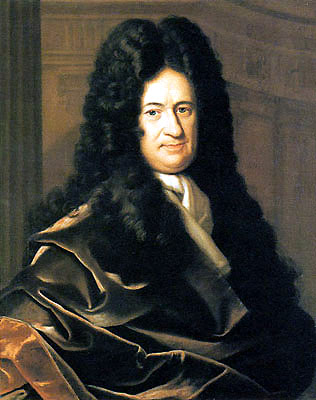
Let me first introduce you to Gottfried Leibniz:
 Handsome chap, no?
Anyway. This guy was a German philosopher in the 17th and early 18th Century, who raised a few principles in his life, one of which was the Principle of Sufficient Reason, which states that:
Since there is an infinity of possible universes in God's ideas, and since only one of them can exist, there must be sufficient reason for God's choice.
 This principle in turn led to the idea that, if God has "sufficient reason" for creating this world, then it must mean that everything in this world is right, and for the best. Let me now introduce you to Alexander Pope:
What's over there, Al?
Pope (1688-1744) applies this idea in his Essay on Man:
All nature is but art, unknown to thee
All chance, direction, which thou canst not see
All discord, harmony not understood
All partial evil, universal good
And, spite of pride, in erring reason's spite,
One truth is clear, whatever is, is right.
Voltaire directly opposes this idea in his Poème sur le désastre de Lisbonne (for more info about the Lisbon Earthquake of 1755 click here, or, indeed, read Candide!), writing the following:
O malheureux mortels! O terre déplorable!
O de tous les mortels assemblages effroyable!
D'inutiles douleurs éternel entretien!
Philosophes trompez qui criez 'Tout est bien'
Accourez, contemplez ces ruines affreuses,
Ces débris, ces lambeaux, ces cendres malheureuses.
Now, if there is one phrase you may get bored of when reading Candide, it's "tout est bien". It's everywhere. Said by, most of all, the magnificent philosopher that is Pangloss. No matter what happens in the novella, no matter how much pain, suffering, and horror he witnesses, Pangloss maintains the view not just that "tout est bien", but that "tout est au mieux". He states that "...tout étant fait pour une fin, [donc] tout est nécessairement pour la meilleure fin". This would be fine, if it weren't for his justification:
Remarquez bien que les nez ont été faits pour porter des lunettes, aussi avons-nous des lunettes. Les jambes sont visiblement instituées pour êtres chausées, et nous avons des chausses [...] ceux qui ont avancé que tout est bien ont dit une sottise; il fallait que tout est au mieux.
Voltaire clearly isn't wanting us to agree with this guy. But it gets even better. Having contracted syphilis from a serving-girl, Pangloss reasons with the lamenting Candide with these words:
C'était une chose indispensable dans le meilleur des mondes [...] car si Colomb n'avait pas attrapé dans une île de l'Amérique cette maladie qui empoissone la source de la génération, [...] nous n'aurions ni le chocolat ni la cohenille.
That's right. "Oh it's fine that I have syphilis, because without syphilis, we wouldn't have chocolate or red dye". Now that's logic for you. And this (arguably absurd and flawed) logic continues throughout the novella. He prevents Candide from saving his saviour and friend Jacques the Anabaptist because "la rade de Lisbonne avait été formée exprès pour que cet anabaptiste s'y noyàt". He attempts to console the survivors of the Lisbon earthquake by telling them that "s'il y a un volcan à Lisbonne, il ne pouvait être ailleurs. Car il est impossible que les choses ne soient où elles sont. Car tout est bien." Shortly after this declaration, Pangloss is supposedly hanged, and so Candide is free to start forming his own ideas about the world. He no longer has Pangloss to explain away all the bad things in the world, and so starts to question the validity of Pangloss's philosophy. After finding his beloved Cunegonde in Lisbon, and finding out her story, he says "Pangloss m'a [...] bien cruellement trompée quand il me disait que tout va le mieux du monde". Candide continues to witness many horrors throughout his journey, and each time he questions more and more how Pangloss can maintain that this is the best of all worlds, eventually leading to his rejection of the philosophy in Surinam:
"Qu'est-ce qu'optimisme? disait Cacambo. - Hélas! dit Candide, c'est la rage de soutenir que tout est bien quand on est mal"
This does not last forever, however, as the thought of being reunited once and for all with Cunegonde at Constantinople causes Candide to proclaim that "Pangloss avait raison: tout est bien". As it turns out, Candide is not only reunited with his (now ugly, not that it should matter *ahem*) Cunegonde, he is also reunited with Pangloss, who, of course, still maintains his philosophy, even going as far as, at the very end of the novel, to suggest that all of the events in the novella, all of the war, terror, catastrophe and horror, were all for the best, because without all of the events leading up to the conclusion of the plot, they would not have their garden:
'Tout les événements sont enchaînés dans le meilleur des mondes possibles; car enfin, si vous n'aviez pas été chassé d'un beau château à grands coups de pied dans le derrière pour l'amour de Mlle Cunégonde, si vous n'aviez pas été mis à l'Inquisition, si vous n'aviez pas couru l'Amérique à pied, si vous n'aviez pas donné un bon coup d'épée au baron, si vous n'aviez pas perdu tous vos moutons du bon pays d'Eldorado, vous ne mangeriez pas ici des cédrats confits et des pistaches.'
If that's not satire, I don't know what is. In a time when the world was shaken not just by natural disaster, but by countless wars, civil unrest, invasion and more besides, the idea that "everything is right" is simply ludicrous. Of course, there's nothing wrong with being optimistic. But to suggest that we live in the best of all possible worlds is, well, mildly insane, if you ask me. And Voltaire clearly thought so too :-P
(Sorry for the length of the post...)

Friday, 6 May 2011

Montaigne: 'De l'institution des enfans'

Michel de Montaigne is, without a doubt, one of the leading forefathers of French philosophy. His collection of essais has influenced and inspired philosophical writers the world over, from Descartes to Nietzsche, and from Emerson to even Shakespeare (just read a little of The Tempest to see multiple allusions to Of the Cannibals). One of these essays, De l'institution des enfans, or Of the Education of Children, to the English-speakers of the world, happened to be the very first text for one of my 2nd-year Undergraduate modules. Its title, Provoking Thoughts: French Literature and Philosophy from the Renaissance to the 20th Century. It is my opinion that Montaigne is the author on this module that encapsulates this idea completely: Provoking Thoughts. Once you get past the strange additional letters and historic spellings (imagine reading Shakespeare, but its French equivalent), Montaigne is one of the most accessible and interesting philosophical writers to read. The ideas he puts forward in the essais are very often appropriate for today's world, and the fact that someone writing 400 years ago can put forward ideas that we haven't quite grasped even in the 21st Century, is, quite frankly, mind-blowing. I don't claim to be an expert on Montaigne, nor do I claim to have read every single one of his essais (as much as I would like to). I do, however, know that of all of the essais I have read, De l'institution des enfans has to be my favourite. Maybe that's because education, its methods, and workings have always interested me, or maybe it's because this essai is, quite simply, fascinating to read. Either way, it's pretty darn good.

Anyway, I should stop rambling on about how much I like it, and actually start talking about it. Montaigne's De l'institution des enfans essentially gives Montaigne's view on how pupils should be taught. Of course, this being the Renaissance, Montaigne directs his essai towards the education of a young, noble boy. Indeed, throughout his essais, Montaigne does come across as, well, a mysoginist snob. However, despite the fact that every feminist bone in my body (and there are a fair few) bristles when I read some of his work, it doesn't take away from the wonder that is De l'instituion. The ideas Montaigne puts forward about education, whilst aimed towards an "upper" minority of citizens, and also quite hypocritical (Montaigne himself was given a very traditional and classic education), are very forward-thinking and extremely interesting, even today.

Essentially, Montaigne's overriding claim in de l'institution is that learning is about doing, not knowing. He says that students should travel the world, learning by actually experiencing things, rather than reading about them or being told about them: "Il ne dira pas tant sa lecon, comme il la fera". It's all very well reading as much as you can, and learning other people's ideas, but it does not mean that you will fully understand it: it is better to have the worldly experience of actually doing things than to simply 'learn' about them. Montaigne states that he would rather be "un habil'homme, qu'un homme sçavant", that he would rather understand things by being able to experience them directly than simply reading about them, or becoming a 'learned man' through books. He also says that "sçavoir par coeur n'est pas sçavoir". Seems odd, even in this day in age, for someone to say that in learning something, you don't necessarily 'know' it, and it was even more unheard of at the time in which Montaigne was writing in. Education was about reading the works of the ancient philosophers and learning things by heart. Recitation has always been a fundamental part of learning, and learning things by heart is still one of the most common revision methods amongst students today. Just think about the number of times you recited your times-tables, and you see that these ideas are still applicable. Of course, Montaigne does have a point. What he is trying to say is that learning something by heart is all very well, but, ultimately, it is completely useless unless you fully understand what it is that you are trying to learn. And what is the best way to do that? Go out and experience it.

Obviously, there are some things you cannot physically 'do'; there are things that require sitting down and reading up on them, or for someone else to help inform you about them. However, Montaigne covers this, too. He says that in order to understand something, the student must be able to use his "propre raison" in order to embrace the ideas himself. The process of education is not all about the teacher. Montaigne quotes Cicero to develop this point: "The authority of those who teach is very often an impediment to those who desire to learn". I think we can all speak from experience when we say that the worst teachers we had at school, or college, or even at University, are the ones who simply stand in front of a class and talk at them. No discussion, no opinions, simply drone after drone about what it is you are required to learn. And, by the opposite thread, the best teachers we remember are those that really engaged us, that allowed us to form our own ideas, that seemed interested in these ideas, regardless of how often they may have heard it before, or how silly it seemed. In order to get the most out of education, it is not about one person standing up and simply relaying all of their knowledge to a group of people, who all write it down and go and learn it. But of course, that is often what education can seem like, especially during Montaigne's time. Dante said that "I love to doubt, as well as to know", another idea quoted by Montaigne in the essai. It is a very forward-thinking idea, to suggest that the process of learning is ongoing. Teachers can learn from their students in the same way that the students learn from the pupils: it is a two-way process. For want of a better phrase, the art of learning is in the discovery. But the students must first be allowed to embrace the ideas of others using their own opinions and reason.

Montaigne maintains that it is impossible to understand something simply by listening to, reading, and learning the ideas of others. The process of learning becomes much more efficient if the student can form his own ideas and opinions. He says "qui suit un autre, il ne suit rien. Il ne trouve rien, voire il ne cerche rien". Just as you cannot blindly follow others and expect to survive in life, you cannot blindly follow the ideas of others without questioning them and making them your own and expect to fully understand anything you learn. Ideas do not 'belong' to the so-called experts. Whilst a teacher may know a lot about a subject, it does not mean that all of the ideas he presents belong to him and only him. Montaigne points out that when an idea is shared, if the student is allowed to attack that idea using his own understanding and reason, it then becomes a part of his own. He states that "la verité et la raison sont communes à un chacun et ne sont non plus à qui les a dites premierement qu'à qui les dict après".

Learning is an ongoing process, for both the student and the teacher. Students must be allowed to embrace ideas. They must be free to go with them, and use them in whatever way they wish, studying them with their own reason and logic, to form new ideas and opinions. They cannot confine themselves to the classroom, rather, they must be able to go out and 'do', to experience things in a real-life context, rather than simply hearing or reading about them. There is only so much a student can fully 'learn', in the true sense of the word, from reading and learning things by heart. In order to understand something, you have to be able to form your own opinions about it, regardless of whether these were aided by a teacher.

Doesn't sound like something from the Renaissance to me :-P.